
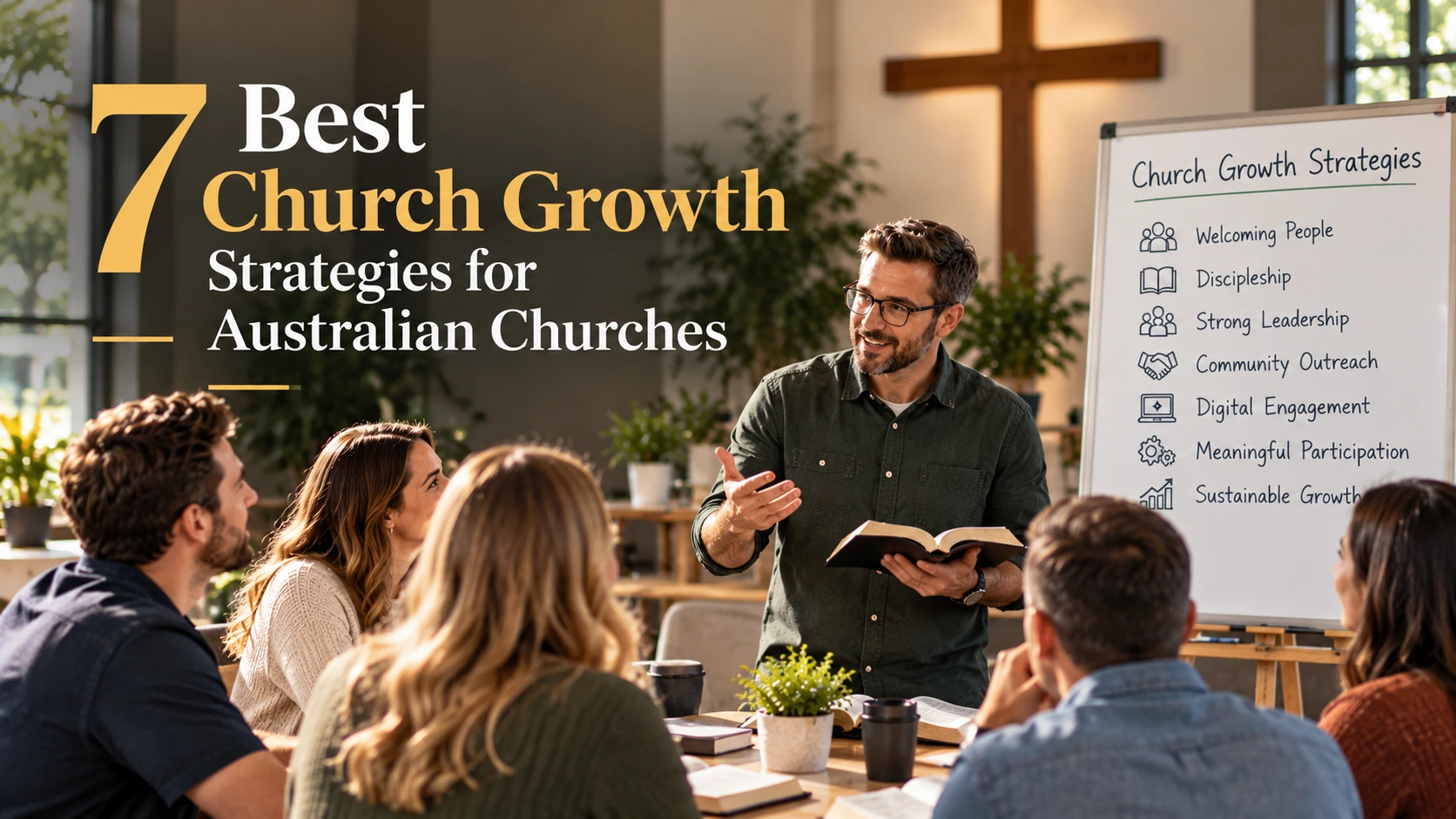
7 Best Church Growth Strategies for Churches

7 Practical Church Growth Strategies That Build Stronger Communities
Growing a church is about more than filling seats on Sunday. Healthy growth happens when people discover faith, develop meaningful relationships, become active in discipleship and find opportunities to serve others.
For Australian congregations, church growth can look different depending on location, culture, community needs and available resources. A regional church may focus on strengthening local relationships, while a suburban congregation might need better ways to welcome new families or connect with younger adults.
The most effective church growth strategies combine spiritual purpose with practical planning. They help churches create welcoming environments, develop capable leaders and build lasting relationships without treating people as attendance statistics.
Whether your congregation is small, established or entering a new season, these seven church growth strategies offer practical ways to strengthen ministry and engage your community.
1. Build a Welcoming Church Culture
A welcoming environment is one of the foundations of healthy church growth.
People visiting a church for the first time may feel uncertain about where to go, what to expect or whether they will fit in. Small acts of hospitality can make a significant difference to their experience.
Church leaders should consider the entire visitor journey, from finding information online to arriving at the venue and connecting with others after the service.
Practical ways to welcome newcomers
- Provide clear service times, location details and parking information on your website.
- Use welcoming signs and easy-to-find entrances.
- Train volunteers to greet visitors warmly without overwhelming them.
- Explain unfamiliar parts of the service when appropriate.
- Provide accessible information about children’s programmes and facilities.
- Offer an optional, respectful way for newcomers to stay connected.
A genuine welcome involves more than a friendly greeting. It creates opportunities for people to build relationships at their own pace.
Churches should avoid pressuring visitors to provide personal details or commit to activities immediately.
Church growth tip: Ask someone unfamiliar with your church to review the visitor experience. Their feedback may reveal barriers that regular attendees no longer notice.
2. Strengthen Discipleship and Small Groups
Attendance can indicate interest, but meaningful spiritual growth requires deeper engagement.
Discipleship helps people explore Christian faith, understand Scripture, develop spiritual practices and support one another through everyday life.
One of the most sustainable church growth strategies is creating opportunities for connection beyond the main weekly service.
Develop a clear discipleship pathway
Churches can offer several ways for people to participate:
Exploring faith: Welcoming conversations and introductory Bible studies for people with questions about Christianity.
Growing in faith: Small groups that encourage prayer, biblical learning and supportive relationships.
Serving others: Opportunities to use individual gifts in ministry and community activities.
Developing leadership: Mentoring and practical training for people ready to take on additional responsibilities.
Small groups can be particularly valuable because they allow participants to build relationships that may be difficult to develop in a large gathering.
However, groups should be organised with appropriate leadership, boundaries and safeguarding practices.
A healthy discipleship pathway should be accessible to people at different stages of life and faith.
3. Develop Strong Church Leaders and Volunteers
Church growth becomes difficult to sustain when too many responsibilities depend on a small number of people.
Pastors and ministry leaders need dependable teams who understand the church’s mission and can contribute confidently.
Leadership development should therefore be an ongoing priority rather than something introduced only when a vacancy appears.
Practical leadership development ideas
- Identify volunteers who demonstrate reliability and a willingness to learn.
- Provide clear ministry roles and realistic expectations.
- Offer mentoring from experienced leaders.
- Encourage appropriate training and professional development.
- Create opportunities for feedback and reflection.
- Recognise contributions and support volunteer wellbeing.
Churches can also review whether their ministry structure allows new people to participate meaningfully.
For example, a congregation might establish a rotating hospitality team rather than relying on the same two volunteers every week.
This approach creates opportunities for involvement while reducing pressure on existing team members.
For practical guidance, read Building a Strong Church Team.
Australian churches can also consult Volunteering Australia’s National Standards for Volunteer Involvement for guidance on effective volunteer practices.
Strong leadership helps church growth remain sustainable and people-centred.
4. Connect With Your Local Community
Churches are part of their surrounding communities, and meaningful engagement begins with understanding the people who live nearby.
Community outreach should not simply be a strategy for increasing attendance. It should reflect genuine care, practical service and a willingness to build relationships.
Different neighbourhoods have different needs.
A regional congregation may identify opportunities to support isolated residents, while a metropolitan church might connect with newly arrived families, students or local community organisations.
Church community outreach ideas
- Host welcoming community meals or neighbourhood gatherings.
- Partner with suitable local charities and support organisations.
- Offer practical workshops that address identified community interests.
- Provide opportunities for intergenerational connection.
- Participate in established local volunteering initiatives.
- Make church facilities available for appropriate community activities.
Before launching a new programme, speak with local residents and organisations.
Listening helps churches avoid making assumptions about what their community needs.
For example, rather than immediately organising a new food distribution programme, leaders could first learn what services already exist and whether a partnership would be more useful.
The Australian Bureau of Statistics provides Census information that can help churches understand the demographic characteristics of their local areas.
These insights should support, not replace, direct conversations with community members.
Community-focused church growth strategies are strongest when service and relationships remain valuable regardless of whether participants eventually attend church.
5. Improve Your Church Website and Digital Presence
Many people will visit a church’s website before attending a service.
A clear and accessible digital presence can help visitors understand what your congregation offers and whether they would feel comfortable attending.
Church websites should prioritise useful information rather than complicated designs.
Essential information for a church website
- Accurate service times and location.
- Contact details and directions.
- A welcoming introduction to the congregation.
- Information about children’s and youth activities.
- Upcoming events and community programmes.
- Accessibility and visitor information.
- Clear opportunities to ask questions or get involved.
Ensure that the website works well on mobile devices and that important information is easy to find.
Local SEO for Australian churches
Search engine optimisation can help people discover relevant church information when searching online.
For example, someone may search for a church in their suburb, a local Bible study or community activities nearby.
Useful local SEO practices include keeping location details consistent, writing descriptive page titles, creating helpful service and event pages, and maintaining an accurate Google Business Profile where eligible.
Google provides guidance on improving local rankings through relevant and accurate business information.
Avoid publishing repetitive pages that target suburb names without providing genuine local value.
Effective digital church growth strategies should make it easier for people to find reliable information and connect with your congregation.
6. Create Meaningful Opportunities for Participation
People are more likely to develop lasting connections when they feel that their presence and contributions matter.
Churches can encourage participation by offering a variety of ways to connect, learn and serve.
Not everyone will feel comfortable joining a large group immediately. Some may prefer smaller gatherings, practical volunteering or informal conversations.
Ways to encourage involvement
Connection gatherings: Organise occasional newcomer lunches or informal morning teas.
Small groups: Provide opportunities for friendship, prayer and discussion.
Volunteer pathways: Explain available roles and offer suitable training.
Community projects: Invite people to participate in practical local initiatives.
Intergenerational activities: Create spaces where people of different ages can build relationships.
Feedback opportunities: Ask members and visitors what helps them feel included.
Participation should always remain voluntary and appropriate to individual circumstances.
Church leaders should also pay attention to people who may face barriers because of disability, transport difficulties, family responsibilities or financial pressure.
Healthy church growth involves building a community where people can belong and contribute without feeling pressured.
7. Measure Healthy Church Growth Beyond Attendance
Church leaders need ways to understand whether their ministry activities are making a positive difference.
Attendance numbers can provide useful information, but they do not tell the whole story.
A church might experience stable Sunday attendance while developing stronger small groups, improving volunteer wellbeing or building meaningful community partnerships.
These outcomes also matter.
Helpful indicators of healthy church growth
- Newcomers returning and forming relationships.
- Participation in discipleship and small groups.
- Volunteer retention and wellbeing.
- Opportunities for emerging leaders.
- Community partnerships and outreach engagement.
- Feedback about hospitality and inclusion.
- Responsible management of church resources.
Review these indicators regularly, but avoid reducing individual spiritual experiences to performance targets.
Church growth strategies should be evaluated with care, recognising that ministry outcomes are influenced by many factors.
Create a simple 90-day church growth plan
A practical plan can help leadership teams focus their efforts.
First 30 days: Review the visitor experience, website information and existing ministry opportunities. Speak with volunteers and community members.
Days 31–60: Select two or three realistic improvements, assign responsibilities and provide the necessary support.
Days 61–90: Review feedback, assess progress and decide which improvements should continue.
For example, a church might improve its welcome signage, establish a monthly newcomer gathering and update its website’s service information.
Starting with a few achievable priorities is often more effective than introducing numerous programmes at once.
Common Church Growth Mistakes to Avoid
Even well-intentioned churches can make decisions that place unnecessary pressure on leaders and volunteers.
One common mistake is focusing almost entirely on attendance figures.
While numbers can help identify trends, they do not necessarily reveal whether people feel connected, supported or spiritually encouraged.
Another mistake is copying programmes from larger congregations without considering local circumstances.
A ministry model that works well in a metropolitan church may not suit a small regional community.
Other challenges include:
- Launching too many initiatives simultaneously.
- Neglecting volunteer wellbeing.
- Failing to follow up with newcomers appropriately.
- Overlooking accessibility and safeguarding.
- Communicating inconsistently.
- Treating outreach primarily as a recruitment activity.
- Making decisions without listening to the congregation.
The strongest church growth strategies are adapted to the needs, strengths and capacity of each community.
Why Healthy Church Growth Takes Time
Meaningful relationships and sustainable ministries rarely develop overnight.
Churches may experience seasons of growth, transition or consolidation.
During these periods, leaders benefit from patience, reflection and a willingness to adapt.
Rather than pursuing rapid expansion at any cost, congregations can focus on developing healthy systems, supporting volunteers and creating genuine opportunities for discipleship.
Biblical passages such as 1 Corinthians 3:6–7 remind Christian leaders that ministry involves faithful service while recognising that spiritual growth cannot be controlled through human planning alone.
Practical planning and spiritual dependence need not compete. Both can shape responsible and thoughtful leadership.
Frequently Asked Questions About Church Growth
What are the best church growth strategies?
Practical church growth strategies include improving the visitor experience, strengthening discipleship, developing volunteers, engaging the local community, maintaining a helpful website, encouraging participation and reviewing ministry outcomes.
How can a small church grow?
Small churches can focus on strong relationships, consistent hospitality, relevant community engagement and realistic volunteer development. Growth does not require expensive programmes or large teams.
How can churches attract new members?
Churches can make service information easy to find, welcome visitors respectfully, offer meaningful opportunities for connection and build positive relationships within their communities.
Why is discipleship important for church growth?
Discipleship encourages spiritual learning, supportive relationships and active participation in Christian community. It helps churches focus on long-term spiritual development rather than attendance alone.
How can churches measure healthy growth?
Churches can review attendance alongside newcomer engagement, small-group participation, volunteer wellbeing, leadership development and community relationships.
Does social media help churches grow?
Social media can help churches share useful information, communicate upcoming activities and connect with people who may be interested in visiting. It works best alongside a clear website and genuine offline relationships.
Final Thoughts
Healthy church growth is built through faithful leadership, meaningful relationships and thoughtful engagement with the wider community.
The most useful church growth strategies are not necessarily the most complicated. Welcoming newcomers, developing volunteers, strengthening discipleship and listening to local needs can all contribute to a stronger congregation.
For Australian churches, the goal should be sustainable growth that reflects their mission, supports their people and creates genuine opportunities for connection.
Begin with a few practical improvements, review what works and remain open to learning along the way.
Explore more practical leadership and ministry guidance through Church Leader Magazine’s article collection.
